Secondo in the park

In my mind, Secondo is still little enough to be entitled to a generous dose of playing hookie.

Most days, after crabbing for 20 minutes about school, she suddenly becomes ecstatic about going. When I pick her up in the afternoon, as she sits with her classmates listening to a story or quietly playing with her backpack on, her joy radiates. As we walk to the car, dark clouds form and she’s suddenly furious at me – both for picking her up and ruining her fun and that I don’t immediately have a glass of warm milk and a delicious snack ready to shove into her plump little hands.

She’s a Gemini and built that way.

Sometimes in the mornings when her protestations are furious and my resolve is weak, I let her stay home with me. This is one of the advantages of being a freelance writer and free of the rotten old 9 to 5.

I let Secondo stay home one Friday recently when Prima’s school was out on spring break. They could keep each other company, I thought, and play cheerily all day long together.

By 10:30 a.m. they were at each other’s throats and I was about to report myself to CPS, when I realized we had received a last-minute invite the day before for a birthday party in the park. I had dismissed it at the time, thinking my little darlings would be much too engaged in the sublime spirit of sisterhood to pry themselves away.

“Get your shoes on girls!” I hollered a little too loud. “We’re going to the park!”
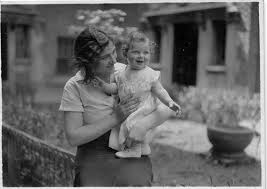
Mrs. Bailey used to dream of the meaningful talks she would have with her Zuzus, over a cup of tea at the kitchen table -- errr on the playground with sand in her shoes.

Prima is getting to the age – who am I kidding? – Prima is at the age where bringing your adorable and charming younger sister to a birthday party is not a very good idea. But I figured Secondo and I could while away the time on the playground a respectable distance from the party. That is to say, in true Mom fashion, I thought I would take care of a few loose-end thank you notes and sundries, while Secondo distracted herself on the playground with another random and clean-looking kid her age.

But that was not to be. Five minutes into my ideal scenario, Secondo bonked her head on a low-slung bar and was crying in my arms. We regrouped, went and bought a smoothie, and came back.

But the vibe had changed or I had dismissed my earlier misgivings about prim multi-tasking.

“Play with me,” Secondo begged, “push me on the swings! Watch me on the monkey bars.”

A cool smoothie coating my stomach, I happily agreed.

We fooled around on the monkey bars and then Secondo dashed over to a smaller play structure with those new-fangled metal telephone-like horns popping out on either end, so that you can play telephone across the playground. This will be fun, I thought, AND stationary.

“Secondo!” I called to her, “put your ear to that blue horn over there and we’ll have ourselves a little chat!”

“OK!” she called out, loving the suddenly engaged interaction.

I smiled at the thought of what her 4-year-old mind might invent to whisper to me.

She galloped over to the horn and leaned in, her face disappearing into the blue funnel.

“Moommmy,” she chirped, playfully, then her tones dropped, “Why did Zsazsie die?”

ZsaZsie was my mom, who passed away from pancreatic cancer almost a year ago. My heart sank a little, I paused for a second and smiled, knowing what I thought I understood about the day, the mood, the mind of my little ingénue was woefully inadequate.

“Well,” I started, trying not to pause too woefully, creating a sunny, matter-of-fact tone. “She had cancer.”

“But how did she die?” Secondo asked from across the playground equipment, the other kids’ shouting, playful voices just a backing track.

“Her heart stopped beating, and she went to heaven.”

“But Mommy, where is heaven?”

“I’m not sure,” I answered craning against an awkward twist of my neck to speak into my horn.

“Mommy, we can’t see heaven. Why can’t we see it?”

And on and on it went in this vein for several minutes, until Secondo grew bored of talking about the crux of our human existence and ran off to find other fun.

I sat back down in my parent’s playground corner and watched her, and Prima, off in the distance, subdued. I wondered if I should worry about this exchange. Should I engage energy in contemplating just how deeply my mother’s death has wounded or confused or unsettled her? I felt like I should worry, but somehow the impulse seemed to float above my mind, vagrant, and numb.

It’s funny how kids think, I thought, and felt myself become a little bit delighted in Secondo’s boldness, proud of her apparent comfort with asking me the tough questions, and duly impressed by her sheer aplomb. My heart and mind validated her, and envied her, too.

Children have such expansive minds, with brand-spanking new neural connections popping up everywhere, all the time. Thoughts of playing with your mom on a school-free day on a brand new playground dash between synapses at the same moment as the concept of death and heaven are unloosed and make a break from left hemisphere to right.
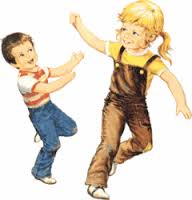
When they play, what does Secondo think about?

The beauty of it is that it’s done without fuss, or worry, or over-analysis, which is what our grown-up minds are forever doing. My Secondo and other children, do not fret over these wild intersections, don’t seek to master the inner chaos that begets, “monkey bar-hand-monkey bar-hand-drop” and then suddenly “why did my grandmother die?”

I sigh a little, of course, and felt a bit weary. But not at all worried.

 

The last sunset of 2011

Mr. Bailey just came in from running to the gas station for Mrs. Bailey’s tonic water to tell us there is a beautiful sunset.

This

The year sunsets as Mr. and Mrs. Bailey walk in the rose-colored twilight of 2011. Image by Modern Mary

being the last day of the year, the idea comes upon me to appreciate it.

“Shall we go take a look at it, then? The last sunset of 2011!” I say with urgency, glancing to the window as the hues in the sky seemed to fade before my eyes.

We hurriedly grab coats, slip in shoes, leash our dog and shuffle out the door.

The mountain sky is full of pillow-y ribbons of pink, fuchsia, orange, backlit with a deep blue of a waning day.

We walk into the cold, into the blue. Take photographs.

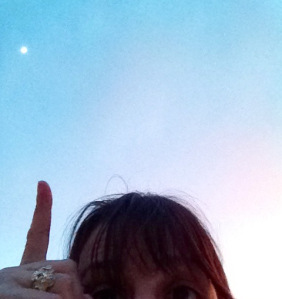
I photograph the girls, Mr. Bailey, then feel the need to be a part of this documentation. I turn the camera on me and point to the sky.

Mr. Bailey tells us we need to see the peak in this sunset light. We walk out further than I thought we’d go.

As we walk, I look at the photo I’ve taken. Half of my face occupies the bottom quarter of the image, along with my finger, pointing up. The foreground is my Mother’s ring, aimed miraculously at the rising moon. Somehow I feel, in this moment, the veil thinning and my Mother’s warmth, reaching.

Image by Modern Mary

Prima walks with a notebook in hand and writes a spontaneous poem. Secondo shivers in the cold, having come outside in only short sleeves and borrowed slippers.

Mr. Bailey walks ahead of his girls with our dog pulling at the leash, his stylish but worn brown corduroy jacket covering his strong broad shoulders, which have held so much of our sorrow, our fear, our grief this year. I radiate gratitude for his strength.

Secondo shivers as we walk; I realize I am warm and strip off my coat and put her little arms into the long, black sleeves. She smiles and says, “warm.”

We turn for home. I hold each of the girls – Prima, arm draped across her shoulder, and tell her she was a blessing to me this year, that she will always be a blessing in my life, just by being her. I pick up Secondo in my puffy black coat, she wraps her legs around my waist. I’m grateful she’s still little enough to hold like this. I whisper into her wild, curly hair, she has been a blessing to me this year. “I love you.” She says it simply, a statement, in return.

We head for home. In the pinks and blues surrounding I want to kiss my mother, not just her face, but her spirit.

“Is she here?” I ask aloud, “Does she see us now?”

“We love you!” I call out, blowing a double-handed kiss to the setting sun.

Without breaking stride, I wipe tears away, and move swiftly toward the entry to our corner of warmth and light in this world, into the light, and let the door shut on the year my mother died.

Missing the “Mom moments”

An open letter to a young mother, out to lunch or shopping
with your child/children and your mom

Hi there,

First, you are beautiful. So is your child. And so is your mom.

Second, I am jealous of you. But I’m working to be much more than just jealous. I want to be happy for you. I want to be glad.

But more than that: I want to share in your moment. I want to take your moment like the softest pashmina made, clench it in my hands and then stretch it across my shoulders tightly, wrapping it all around my body, twice, if it will go.

When I look at you, shopping with your mom and your child, eating with your mom, chatting with your mom, I wonder. Do you realize how precious this is? Do you understand the way this moment is nourishing your spirit? Maybe you do. I do not believe I ever fully did.

Did you know this is a moment? A moment of significance, importance? The most simple, yet sublime comfort there is? It’s a moment of togetherness with your child, your mother, and you. Here in this café, walkway, shopping mall, store, grocery market – this moment is something you will remember forever. Long after your mother can no longer accompany you.

I want to tell you, it is. I want to tell you, like your best friend might, this moment is precious. That you should be basking in it, if you are not. Are you making mental notes? Are you taking mind pictures of your mom’s face as she wipes your child’s chin, reaches for his hand as you cross the parking lot, or takes the stroller as you pull a blouse from the rack, and ask for her opinion?

I do not know how to explain its significance except in the negative. For that, I apologize. But these small moments, which seem infinite to you right now, are finite. You might get hundreds, thousands even. But there will be a point when they cease to exist.

And when they do, somehow they will be what you miss most about not having an alive mom. The lack of them will take your breath away and wound you in ways you did not understand you could be hurt.

Here, in this precious moment, your beautiful mom gets to love you, her beloved child, and her adored grandchild, simultaneously. Her presence provides instant, unspoken support for all that you are doing or attempting to do to raise your child.

Whatever life you’ve chosen (working, not working, freelancing, volunteering, turbo-parenting), your mother supports you, even if she gives you pause to think about it all once in awhile. Whatever lessons you wish to impart to your child (even if they are just: use a napkin, say thank you, wash your hands) she is reinforcing. Whatever woe presses upon your heart leaves marks on your mother’s heart, too.

And here’s the last bit, then I will leave you in your glorious moment.

Even if you are harried, rushed, oblivious due to the many demands of wifehood, motherhood, or work, and you don’t feel it, you are nourished, upheld, comforted, spoiled and delighted by this connection with your mother, the source of all you are. This happens imperceptibly while it happens. And it’s happening.

And it’s wonderful. And so are you. And so is your mom.

Mary ama dormire (Modern Mary loves to sleep)

Anyone who knows me well knows how much I love to sleep.

Whether waking or sleeping, Modern Mary makes sleep a priority. Postcard image by Trish Grantham

It might be in my genes. My father has always been a notorious sleeper. Give him 5 minutes in a comfortable chair, regardless of the hour, and he will give you a nap.

I’m not so much the napping type as I am the sleep-for-10-hours-at-a-time type. I often tell Mr. Bailey, “You know what I’d like to do? Sleep for two weeks.”

In times of stress, I like to head to bed around 9:30 and sleep, preferably, until 8 or 9 a.m.

If you’re a sleeper like me, you know dreams sometimes play a role in the experience.

Since my mom died, my dreams have become rich, offbeat and resonant parts of my nighttime routine.

It seems every suggestion or fear is immediately processed into my subconscious and put into the dream queue.

I’ve had a hard time adjusting to the absence of constant conversations with my siblings, the important conferring, the unity of our family as we fought cancer collectively. I am in the midst of deciphering what our family will be like now that my mother, the spoke, the emotional home of our unit, is gone.

In my midnight dreams, my three brothers and I are in my grandmother’s old house, together, sharing memories, looking around the dining room, theFloridaroom, laughing, when suddenly we hear the new owners arriving home. We all run into the yard, dashing like mad from our nostalgic breaking and entry.

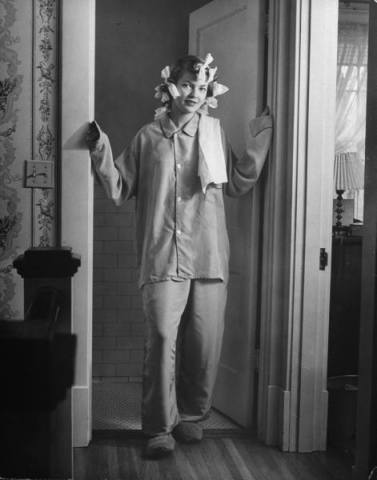
I keep forgetting to put my hair up in rag curls at night!

I’m running blindly, trying to keep track of my brothers, desperate. Where have they gone? I catch flashes of their clothes as I dash down a set of stairs somewhere. We need to stay together, I insist.

Awake, I have fretted about the coming holidays, with their ties to home and family, memories like glittering lights on a twinkle string. They seem to illuminate only sadness without my mom.

At night, my third eye takes me to a future peculiarly reversed. It’s a future in which my father died instead of my mom. There we are in the midst of the holidays without him, all of us gathered where we always do – in my parent’s kitchen, surrounded by friends, family, trying to make sense of the first holiday without him.

In our daylight conversations, Mr. Bailey suggests we do something completely different and take a trip toNew Yorkright before Christmas.

As I lay sleeping, I dream we are stepping out of the airport into aNew York Citydecorated to the hilt with festive lights, swaying in a brisk winter wind. I feel the straps from the luggage I carry (with two kids we always have lots of luggage) dig into my shoulder as we cross a busy street to our hotel. Then we’re walking through a warm hotel, a corridor decorated with trees and ornaments and people milling, all sorts of people, here, and not home, for the holidays. It feels strange, exciting.

When I wake, I tell Mr. Bailey about myNew York dream.

“You are so impressionable,” he says, his eyes twinkling.

The dreams sometimes detract from the restfulness of my sleep, and sometimes enhance it. I wake with a sinking feeling so often it’s become a part of my morning routine. I imagine actually sinking into my bed, being swallowed by it. It’s not unpleasant.

Eventually, when all of the fantasies of slumber have been dislodged by the slanting soft light of morning, I get up. I RSVP for tonight to my sheets, my pillow, my comforter, my dreams.

Wrestling with Hope

You know what hope is?
Hope is a bastard
Hope is a liar, a cheat
and a tease.

Hope comes near you?
Kick its backside,
got no place in days like these.
-Picture Window, lyric by Nick Hornby, music by Ben Folds

I have been hearing the lyrics to this song by Ben Folds and Nick Hornby over and over in my mind over the last week. It’s a brilliant lyric I wish I had written.

Not sure how thoughts and emotions bounce around inside of you, but sometimes my brain cannot think anymore along linear pathways. It’s not capable of rational thoughts that further my growth. When that happens, music tends to take over.

I hear the music of poems I’ve read, snippets of stuff I’ve written and then – as though filing through an old-school rotating round Rolodex, I hear my brain flipping through 34 years of music and lyrics for that One.

Sometimes I hear a foggy, faded version for days until I can consciously recall the words and the tune, solidly.

When it does finally jam into gear, the song usually flattens me. Literally. The best way to channel this music and tune it into my emotional center, to let it express that which I am unable to access rationally, is to lay flat on the ground next to a speaker and play the song. Loudly. And repeatedly, if necessary.

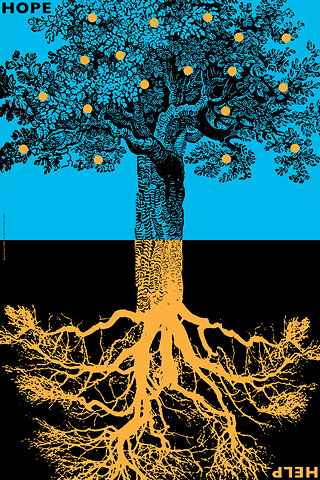
Ryan Russell Design

It sounds crazy, surely. Maybe it is. But it works for me. When I’m sung out, wrung out, cried out, a mellowness comes over me and the wave of song has disintegrated, is being pulled back out to sea.

This song came to me out of nowhere, driven by two things happening: 1) letting myself venture into the anger stage of grief, allowing the fury I feel at the whole bullshit cancer saga my Mom and my family went through and 2) suddenly remembering Mr. Bailey, at least a year ago, singing part of this lyric as he listened to it for the first time. I did not recall what it said entirely. Something about hope was all I recalled. But suddenly, I had to track it down.

After my ritual, I realized “Picture Window” should be handed out *preferably at the precise moment a cancer patient/caregiver gets completely sick of hope* as a cathartic listening device. I’ve come to appreciate the song’s power too late.

Eventually, I recalled trying to listen to it when Mr. Bailey first presented it to me. But I wanted none of its bluntness or pessimism then. Hope was my only friend, my only consolation and I didn’t feel able to disrespect the notion of it then.

Now, I’m fine with it all. Why? Because hope isa bastard. (Or as my Mom used to tell me, “Sometimes, life’s a bitch!”)

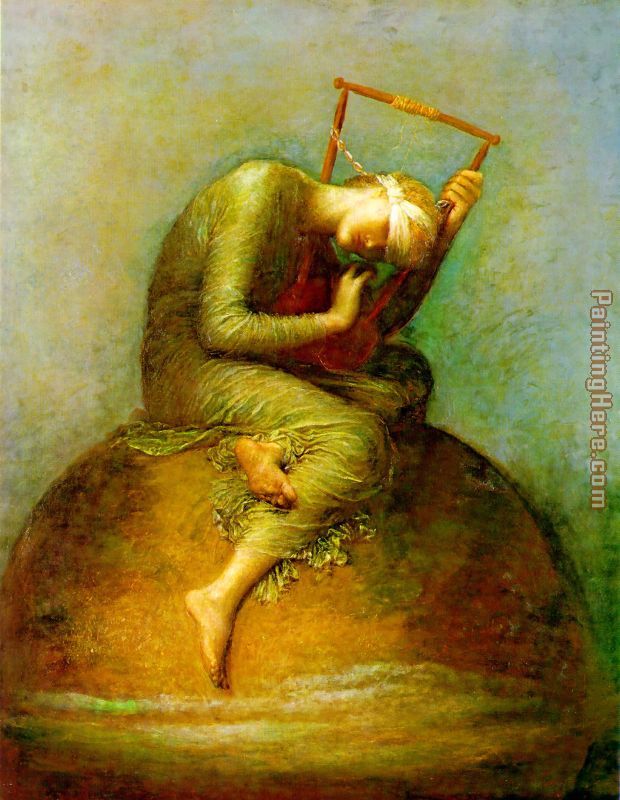
Hope by George Frederick Watts

Sometimes, hope just flat out lets you down.

And still we hope. This song expresses what I didn’t want to express then – the desperate position one is in when they turn to such a fickle (yet powerful) notion like hope and proceed to make it the center of their perseverance.

Hope made my Mom take that last chemo treatment that made her last months a hellish physical battleground. Hope brought her down to 100 pounds. Hope stole her hair, her beautiful eyelashes and eyebrows. Hope kept her injecting herself with insulin, bloating herself with IVs, swallowing pills, forcing down food she couldn’t taste. Hope influenced so much of how we approached life during those two years.

And we got a cruel result.

Perhaps years from now, I’ll have a better grasp on Hope. I’ll be able to find some cockeyed and optimistic way to tell you, dear readers, that the Hope we had and used to

our own advantage made everything – or even something – better. Or maybe not.

In the meantime, I’ll have this song.

(Click here to hear “Picture Window” in full.)

I can see clearly now and your underwear is way too small

When someone you love is fighting for their life, a lot of stuff goes by the wayside.

A more basic version of you emerges. You develop a predator-like focus on the beasts you’re fending off. For our family, those beasts were cancer and death. We were on the side of many more years and love overcoming illness.

Our eyes were opened, and focused on beating cancer -- and not on so many other things.

Once the battle was over, my focus seemed to shatter into a thousand pieces of distracted attention.

Lately I’ve been working with my SuperGlue, in tongue-over-lip concentration, trying to fit at least a good portion of the pieces back together again.

The pieces are interesting! And shocking.

Take, for example, my daughter Prima’s bedroom closet. It was bursting at the seams with too-small clothes, socks and shoes. While I was the cancer predator, I just shoved new stuff in there, making small pliant promises I would go through it all later.

Later came the other evening. My younger daughter out with her dad, we dove in and began culling through the mess. I tackled her underwear drawer first. I found my 8-year-old daughter had been squeezing herself into size 4, 5, and 6 panties.

“Don’t worry, Mom,” she told me bluntly, when I apologetically pointed out the size discrepancy. “They stretched out.”

Oodles of guilt and shame were followed by a profound love of my Prima, who tends to find the silver lining, especially when she can spare someone’s feelings.

Another interesting piece was our desk. Sheesh! Outdated bills had started mating under the piles of unrequited junk mail, coupons that shouted, “FREE!” birthday cards never sent and school notices that never notified us. (Me: Did you know Prima has a half day today? Mr. B: No, did you?)

The Bailey's desk was about 1000 times worse than this, and remains a work in chaotic progress.

A carefully placed stack of colorful woven baskets yielded bills from the early cancer predator days, shoved away and now outdated, thankfully, and easy to shred.

I’ve woken up! And the living room needs painting and the floor needs changing and our lives need a fresh coat of paint.

The cancer predator was cruel, but it’s over now. And as much as I miss my Mom (with every thought and every breath, every single day), I am glad it’s gone – even if I have to start with tight underwear.

It’s a Messy (Wonderful) Life

When I first started writing this blog, I was telling a friend about a little frustration I was experiencing with Mr. Bailey. She gasped and smiled, astonished and relieved.

“But I thought it was a ‘Wonderful Life’ for you!”

The truth will set you free, even if the truth is a emotional mess. Art by Max Fujishama

“Are you kidding me?” I told her, laughing along. Right then, I silently vowed to make sure this blog wasn’t just some cherry-coated version of my messy life.

It’s been really messy lately.

I lost my mom to cancer 12 weeks ago yesterday.

Her death was the culmination of two years of head-spinning living. (She was never dying, until the very end, when she was.) Chemo and vacations, radiation and celebrations, laughing and crying, wig shopping, nail biting, port accessing and tests that went our way and, then, didn’t.

There were highlights – a family trip that wouldn’t have happened otherwise, a closeness with my dad and my siblings, an appreciation for what the day would bring and, ultimately, a good excuse for me to get off the crazy breakneck pace treadmill of modern life and focus on what really mattered.

Maybe by that list you can tell I am an optimist, a half-full kind of girl.

But the truth is, since my mom died, it’s hard to be half-full.

When you walk around missing an essential part of yourself, of your spirit and guide, your own personal unconditional, it’s difficult to feel fully committed to optimism.

“Write,” Mr. Bailey would tell me. “Write,” my best friends would softly suggest. “Write,” my therapist would encourage.

I made all kinds of excuses.

Modern Mary contemplates what and where to write from here.

“I can’t get into Modern Mary’s headspace right now,” I would say.

“It’s too fresh,” I would rationalize.

“No one wants to hear about my grief,” I would moan. And some days that really feels achingly true.

Today I realized with all my excuses and all my faux writer’s blocks, I was breaking that vow to be honest with my readers about my messy life.

I think my readers can handle the muddle because life is messy, just like my Mom used to tell me.

Sometimes it’s so messy it can take your breath away and make you doubt what you know to be true.

But the mess is beautiful and difficult, and ultimately what makes us fellow travelers on this journey of life.

And all we can do sometimes is just to share it.