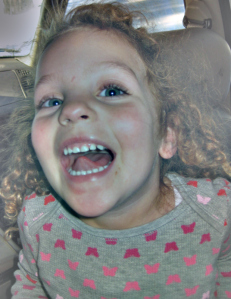
Secondo and I are walking hand-in-hand across a snowy parking lot. Her chubby 5-year-old hands echoed by the puffy brown and pink coat she’s wearing, hood flung back, wide-open to the blue sky.
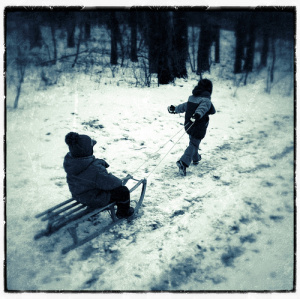
Photo by Michał Koralewski
“I believe in God,” she announces as we weave through the icy spots, the dirty snow, the salt and grime of the lot. “And I believe in Santa Claus.”
I smile broadly.
“Do you?” I say through my grin. “OK.”
A day earlier, Mr. Bailey had pointed out to me that Secondo was in a stage of discernment and wonder. What she is learning in her first year in formal school and comes home in delightful and confusing, definitive and doubtful ways. It’s a glory to witness.
I caught her the other day walking around the house with the illustrated children’s Bible my mother gave me as a kid. She was pretending to read each story as she flipped through the pictures. She disappeared, then reappeared, saying, “Why did Jesus die on the cross?” in the tone of voice reserved for questions like, “why do we sleep at night?”
Then, one night as I was tucking her into bed, “God is invisible,” she told me, very matter-of-fact, then suddenly a bit angry, “WHY?”
At five, she is now aware of the larger world around her, even as she struggles to define it in a meaningful and ordered way. She knows the bliss of having her teacher point to her as an example of appropriate behavior – and the embarrassment of having her classroom card turned from green to yellow for pushing in line. Yet, she postpones her tears of hurt until she’s away from school, ensconced in our car, sobbing, “I was going to get only green all year long!” Secondo basks in the warmth of loving friends’ attention, flinging her arms wide and singing at her Thanksgiving performance of “Any Turkey Can Tango” or “We Wish You a Merry Christmas” on Christmas Eve. Yet, she’s also run headlong into a shower of hurtled sand, thrown hard in her face by someone she assumed liked her. She even knows the embarrassment of having a recess accident.
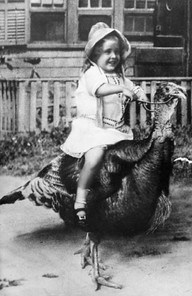
This would be Secondo.
For weeks, at night when I tucked her in, she told me she was dizzy and couldn’t fall asleep. I gave her a comforting placebo of lavender cream that took away the dizziness. Even as she doubted the efficacy of this little invention, she insisted I apply it religiously at the same time, each night, waking from a dead sleep if she’d dozed off in the car, to ask for her “dizzy cream.” Then suddenly one morning she sauntered into our room and announced she didn’t need it anymore, her dizziness was cured.
On the day before Thanksgiving as Mr. Bailey prepared the turkey to take a long briny bath, she walked into the kitchen and stopped as she caught sight of the dimpled white fowl sitting on the counter. “Who killed that?” she deadpanned.
She’s exploring the poles of human experience – the agony of the yellow card, the ecstasy of Christmas morning and well, the mysterious muddle of faith, death and life for which none of us have answers.
Even better than this journey of hers, is the opportunity for Mr. Bailey and I to watch the world swirl around her tiny frame, as she strides boldly into each new day, and then settle softly every now and then.